
Feel like it’s time to have a go at yoga? Look for a class here
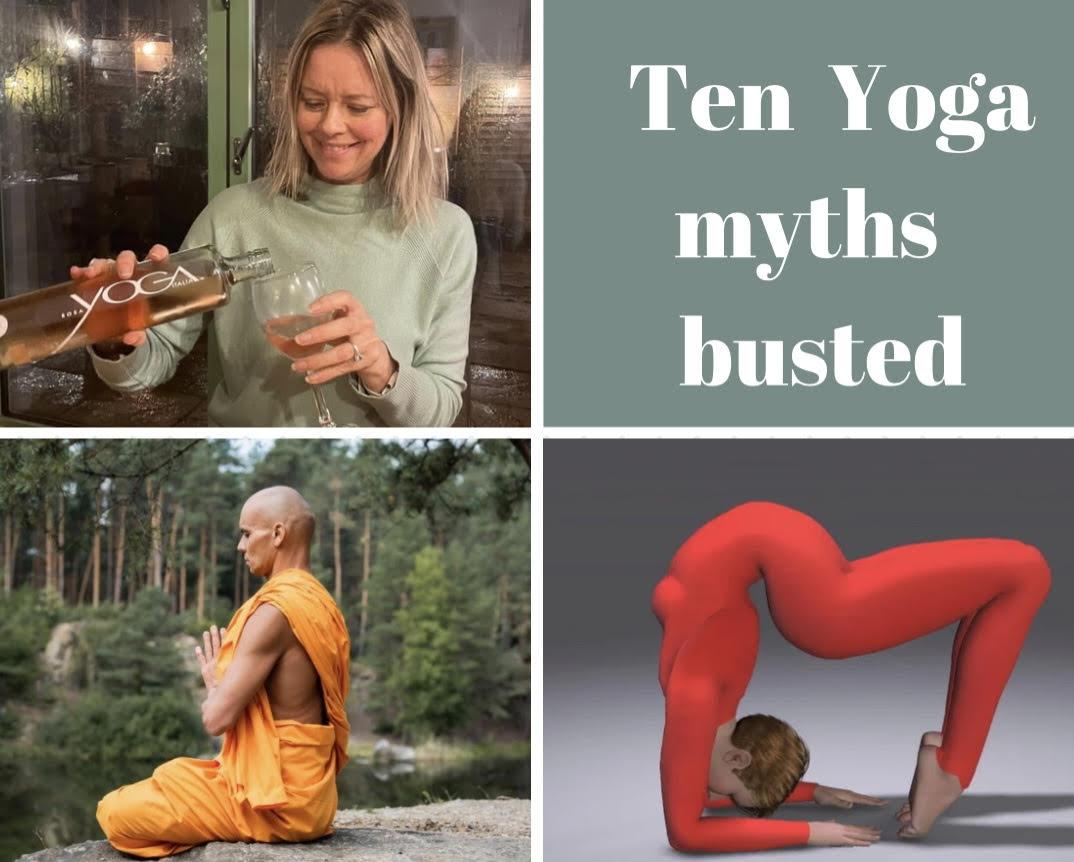
Be honest. What really comes to mind when you think of yoga? A pious figure with a shaven head, sitting cross-legged and transcending thought? Or perhaps a siren clad in a sleek catsuit, resembling someone you’d more likely see in a circus?
An estimated 300 million people practise yoga worldwide, but despite its popularity, many myths about yoga persist. Practising yoga offers numerous benefits, including stress relief, improved sleep, and increased strength. You could be missing out on these advantages if you allow these misconceptions to mislead you. Let’s change the narrative and debunk some of these myths.
Myth 1: You have to be flexible.
Being flexible is overrated! If there’s such a thing as a self-fulfilling prophecy, I’d like to erase the notion that “I can’t do yoga because I’m not very flexible.” Most people have some level of flexibility; otherwise, they wouldn’t be able to move at all! Extremely flexible individuals can often lack strength, and strength is more important than flexibility. So, don’t be discouraged by this misleading prerequisite.
Myth 2: You have to be serious.
If you suddenly find yourself in a class with yoga purists, you might want to make a quick exit. Taking your practice too seriously in an ego-driven environment can put your body into fight-or-flight mode, which is the opposite of what you’re trying to achieve. Approach your practice with a child’s mindset. I like to think of yoga as playing on your mat—experimenting with shapes, balancing, and being curious. Each time you step onto your mat, you will have a new experience. Let your body make the decisions for a change.
Myth 3: You have to be good at balancing.
The second self-fulfilling prophecy I’d like to eliminate is: “My balance is so poor.” Balance is my favorite component of the yoga syllabus. We have A-star students as well as those who are unclassified, but you can’t deny that standing on one leg stops you from catastrophising about what you’re making for dinner. Balancing strengthens your bones, focuses your attention, promotes efficient breathing, and, more importantly, it’s fun—it’s adult play! To quote George Bernard Shaw for the hundredth time since I discovered this quote: “We don’t stop playing because we grow old; we grow old because we stop playing.”
Myth 4: You have to be a hippie
Yawn!
Myth 5: You have to be spiritual.
What exactly is spirituality? It can be defined as “the quality of being concerned with the human spirit or soul as opposed to material or physical things.” People come to yoga for various reasons. While some purists argue that yoga without a spiritual element is merely stretching, I believe it is about embodiment. Although this term may sound cryptic or a bit pretentious, it simply refers to the experience of feeling the sensations in your body as you move and breathe. This practice helps you become more familiar with the vessel that has carried you throughout your life. Sometimes, it just needs a little tender loving care. This practice of self-inquiry has a magical way of calming the nervous system. Perhaps this is what spirituality truly is.
Myth 6: Yoga is for women.
To be honest, it used to be quite the opposite. Yoga is 5,000 years old, and if you explore its origins, you’ll find that it was almost exclusively a male practice. This reflects a patriarchal society, which is unfortunately pervasive. It’s only since the westernisation of yoga that it has become more female-dominated. However, I’m pleased to see that more men are returning to yoga, especially those who focus solely on weightlifting. Yoga helps them improve their arm mobility, which is quite beneficial.
Myth 7: You have to be “good” at yoga.
I’m not entirely sure what this means. If you can breathe, you can do yoga. Yoga can be practised anywhere. If you lie on your mat for an hour and focus on your breath and the sensations that arise in your body during that time, you are doing a great job of practising yoga. Remember, everyone has to start somewhere. There was a time in our lives when we didn’t know how to walk, but we persevered! Yoga is about moving your body in your unique way and doing what feels right for you. The body is constantly transforming. As Heraclitus, the Greek philosopher, said, “Change is the only constant in life.”
Myth 8: You have to be vegetarian or vegan.
What is the connection between yoga and vegetarianism? The yogic principle of Ahimsa, which means non-violence or non-harming, likely provides the answer. Many yogis choose to follow a vegetarian or vegan lifestyle to reduce the suffering of sentient beings and practice Ahimsa. However, it’s essential to start by being compassionate towards yourself. If eating meat works well for your body, there’s no reason to eliminate it from your diet. I enjoy plant-based foods, but I also eat meat because I find it the easiest to digest. So, why would I stop eating it?
Myth 9: You have to be slim to do yoga.
Yoga is not determined by body size or shape. One of the most harmful stereotypes about yoga is the belief that only thin and flexible individuals can participate. This misconception is completely false and understandably intimidates many people from attending yoga classes. The truth is, if you can breathe, you can do yoga. Ultimately, yoga is about the breath that connects and enhances your practice.
Myth 10: You shouldn’t drink alcohol.
whoops!